
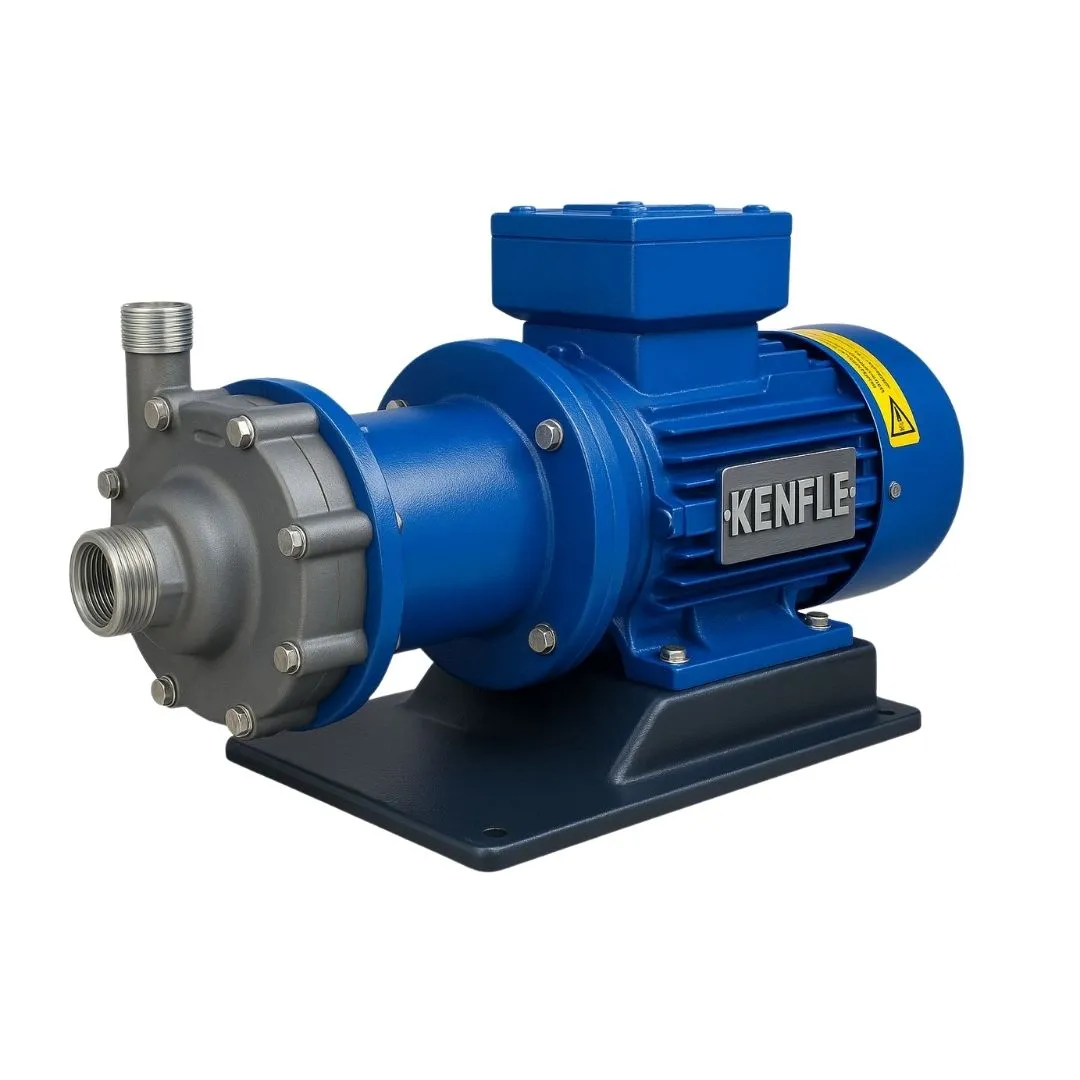
What Is A Magnetic Pump and How Does It Work?
Magnetic coupling pump is a type of pump based on magnetism. They are also referred to as acid pumps. Magnetic coupling pumps are the name given to the type of pump designed to pump liquids containing toxic and other dangerous substances without the use of mechanical seals. Elements flowing through electricity are kept in a completely closed area and the magnetic force is transmitted by the magnet positioned on the shaft where the liquid wheel rotates.
What Are The Technical Specifications of Magnetic Pump?
Body Material: PP/PVDF
Maximum capacity: 130 m3/h
Maximum head height: 48 mss
Fluid viscosity: 150 CPS
What Are The Advantages of Magnetic Pump?
Magnetic coupling pumps are basically pumps used for dangerous substances, but they also have many advantages. One of the biggest advantages of the magnetic coupling pump is that it does not need sealing equipment. Thus, there is no such thing as the wear of the sealing equipment, which is frequently encountered in pump faults, and there is no situation that endangers the pump because there is no wear. Pump maintenance should be done regularly and even more than other types of pumps. Magnetic coupling pumps are one of the low-cost pump types. In addition, it can be said that the assembly processes of magnetic coupling pumps are easier and faster than other types of pumps.
What Are The Magnetic Pump Usage Areas?
Magnetic pumps, which have a special sealing design suitable for pumping chemical-based liquids against high chemicals due to the lack of leakage or emissions, can also be used to ensure that the water treatment industry, chemical industry, galvanic and electronics industry, automotive industry and the following examples can be used. we can determine.
Transmission of liquids that contain chemicals such as paint, oil, some acids such as hydrochloric or sulfuric, or substances with corrosive effects,
During the filling and discharge processes of tankers carrying dangerous and flammable substances,
Applications where liquids that may erode the gasket materials or that are likely to crystallize the gasket surface,
Some processes required in nuclear facilities
Mass chemical treatments,
Reactor feeding.
Detail: Dry Working Protection
It prevents expensive damage to the pumps as a result of valve closure and clogging of the suction line. When the user is not sure if the liquid is constantly present in the pipes, we recommend using this device to drain the tank vehicle or to drain all other applications. This device constantly checks the active power of the motor, which is the medium value of the instantaneous power absorbed by the pump, through the retrieval of information about voltage and voltage changes. It is possible to adjust the minimum power and the trigger time of the device through a set point and an adjustable timer. If the power drops below the specified value, the pump stops and the device must be turned on manually again. In case of constant intervention of the device, check the presence of liquid and/or the correct operation of the plant to find out the reason for the device operation.